Rock Music in 2026: A Genre Finding Its Next Generation
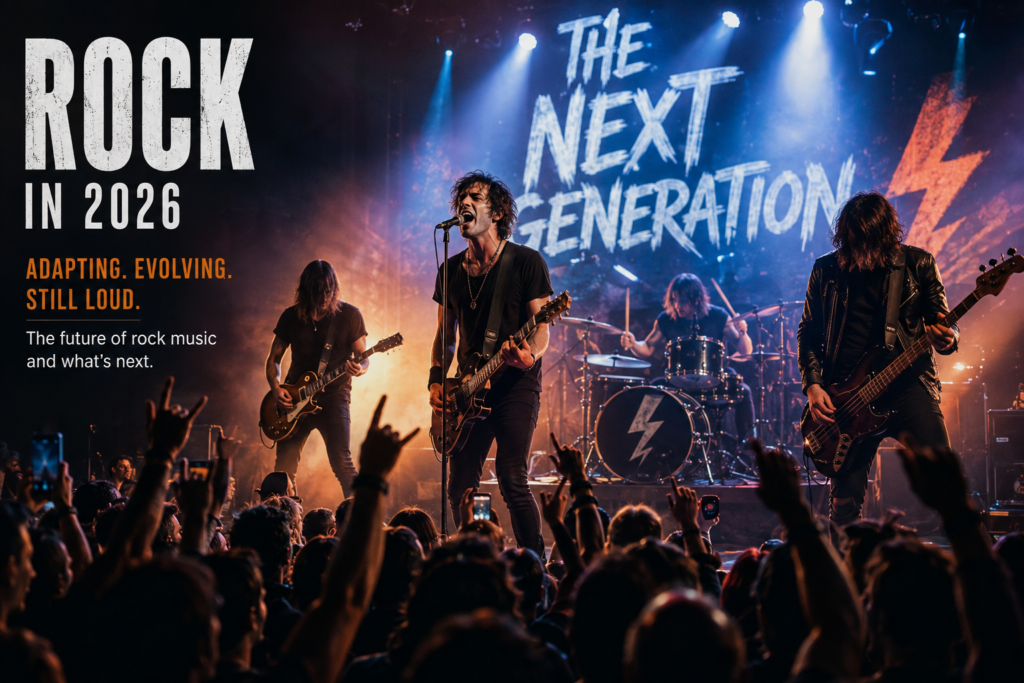
Rock music may no longer dominate the mainstream charts the way it did decades ago, but 2026 is proving that the genre is far from finished. Instead, rock is adapting to a music market increasingly shaped by streaming, social media, genre-blending and the renewed value of live performance.
The numbers suggest there is still a substantial audience for rock. In the UK, rock accounted for 22.2% of singles consumption in 2025, its strongest share in nearly a decade, while rock also remained the country’s leading album genre. Globally, streaming continues to drive the music business, with recorded-music revenue reaching $31.7 billion in 2025.
For today’s rock artists, however, success looks different. Rather than competing solely for radio airplay or traditional album sales, bands are building audiences through streaming platforms, short-form video, playlists, festivals and touring. The boundaries between rock, pop, metal, punk, indie and even country are becoming increasingly fluid. That crossover is particularly important as country and other genres expand their audiences in 2026.
Live music is another major opportunity. Established rock acts continue to attract audiences with major tours, while younger artists are finding ways to turn online attention into ticket sales and dedicated fan communities. The continued demand for concert experiences gives rock something streaming alone cannot provide: the energy and authenticity of a live band.
What to Expect for the Rest of 2026
The second half of 2026 is likely to bring more genre experimentation, strong festival and arena activity, and a continued revival of guitar-driven music. Legacy artists will remain commercially important, but the most interesting development may be the emergence of younger acts that combine traditional rock musicianship with modern production and digital marketing.
Rock is also likely to benefit from listeners searching for something more distinctive in an increasingly crowded streaming environment. With global on-demand audio streams reaching 2.8 trillion in the first half of 2026, competition for attention is enormous. The artists who stand out will be those who offer a recognizable sound, compelling visual identity and a genuine connection with their audience.
Rock’s future, then, probably isn’t about returning to the past. It’s about taking the best elements of the genre—guitars, live performance, songwriting and attitude—and putting them into a modern musical landscape. If the first half of 2026 is any indication, rock still has plenty of volume left.